Reading this guide will also help anyone who might not be aware of the full range of opportunities made possible by technology and it will help you to understand more about the various ways that this form of artistry can help you; how to go about ordering them; how to brief an agency and what happens after you’ve pressed the figurative button for an agency to proceed.
So, what are CGIs?
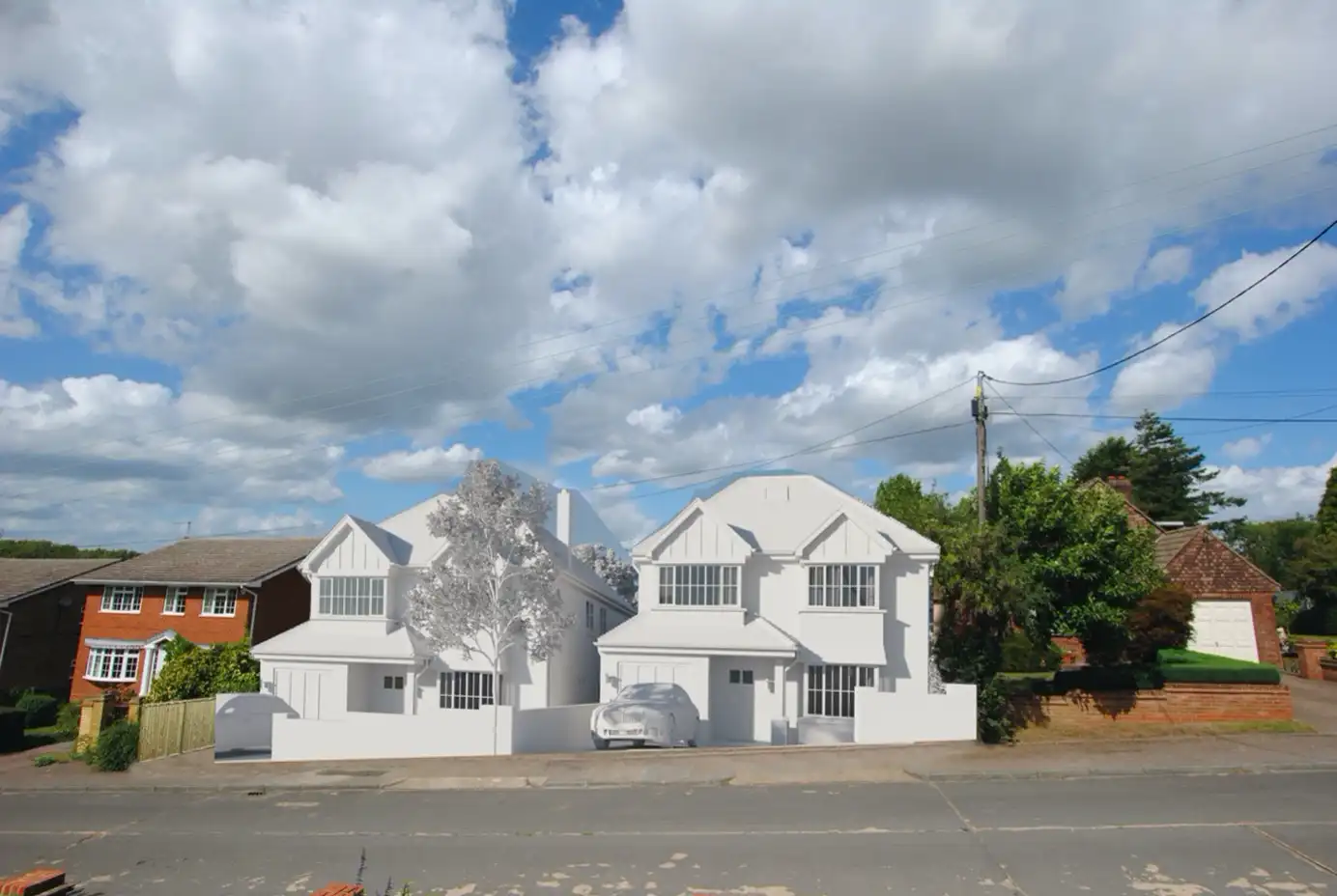
CGI house or apartment block images, sometimes called 3D architectural representations or arch viz (short for architectural visualisations) can create anything from a 3D floor plan to realistic-looking images of property interiors and exteriors, built inside computer software by specialist artists. CGI stands for Computer Generated Imagery, and because they’re based on an architect’s drawings of a property, they can be created before a brick has been laid. They are made by gifted and skilled property CGI artists using powerful workstations and sophisticated software and can frequently take several hours to render. Property CGIs can illustrate in a near-photo-realistic way, how an exterior or interior is intended to look when it’s built. They can be animated, showing the anticipated glory of an interior as though it has been filmed by a video artist. They can even help buyers/investors/lenders, for example, to see new homes in the context of an existing street scene, by adding the CGI to a photo.
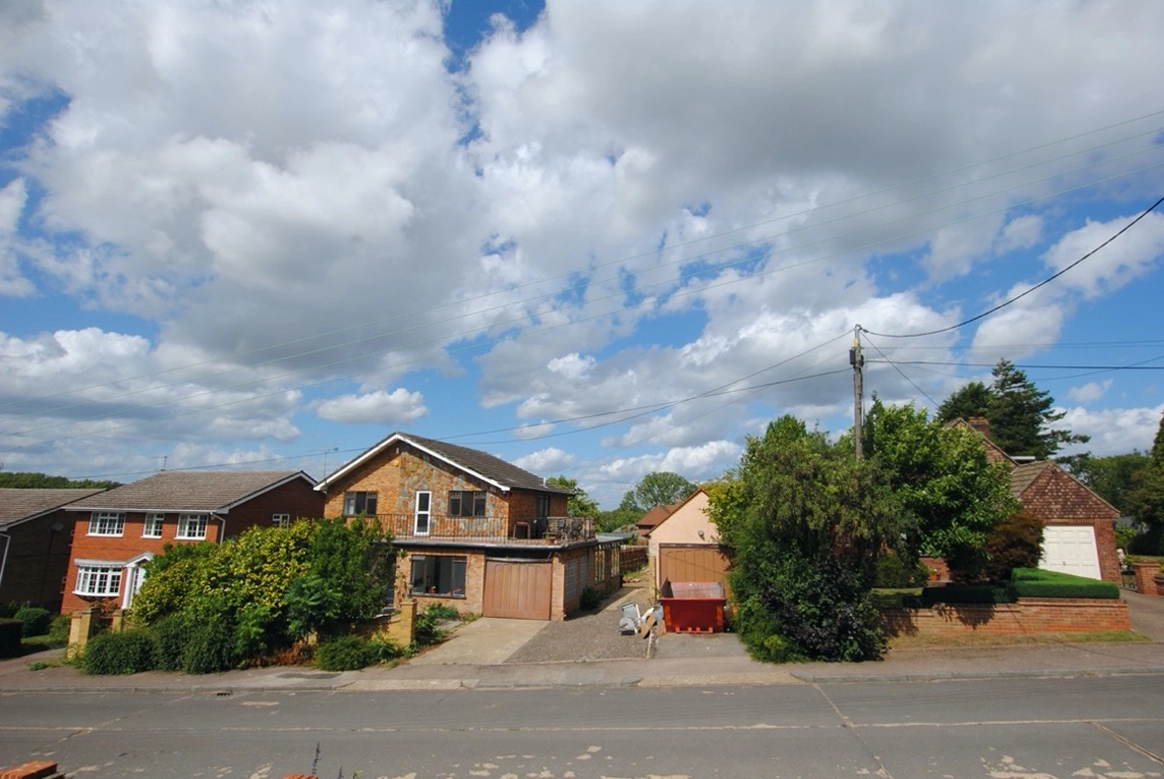
Agent’s photo before a CGI is added
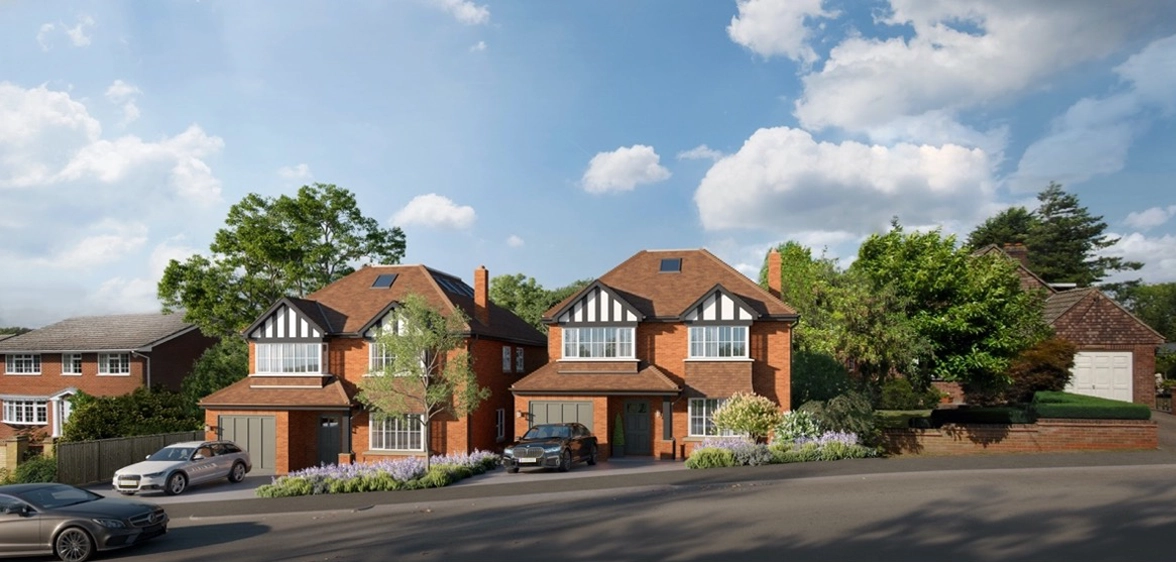
Agent’s photo with CGI composited in
Why are CGIs helpful? Are they just for property marketing?
For a prospective purchaser to commit to buying a property that is in its early build stages, most need to see something more than an architect’s drawing. As good and accurate as those are, to an untrained eye they can appear very confusing especially when they are annotated with information meant for the builder. So, property CGIs help potential purchasers, and funders/investors visualise the intended build as they might appear when they have been built. And as with the image above, they can also show PlanningAuthorities how new build properties, extensions and remodelling works will appear in the context of their location.
Another big benefit of selling off-plan is that this opens the door to offering buyers more choice (if the developer wishes to provide this). After contracts exchange, developers might be happy to let buyers choose their décor, kitchen units and so on. An early sale also means that funding for future developments may become easier and development interest payments can be reduced because sales are able to complete faster.
Quality vs Price
Just as with everything in life, you get what you pay for. Because all artists are not equal and 3D software varies so considerably in complexity and sophistication, it is possible to pay less for a poor-quality result than you would for a CGI of high quality. Think cartoonist vs. Michelangelo.
So, by all means shop around but ask your chosen artist for a portfolio of their previous work. It’s likely that the properties you’re marketing will be worth hundreds of thousands of pounds or maybe millions. Cheap CGIs are unlikely to cut the mustard. So, it is always best to ask an artist for their portfolio. We (Property Marketing Agency – DCTR) have had lots of instances of agents and developers who have gone down the wrong route and when other artists have ‘got it wrong’, they have asked us to start again from scratch.
How to brief and order a CGI – Advice from the Agency
It boils down to this. The more information we have at the outset, in the form of CAD drawings, or PDF drawings the better it is for us to give you an accurate quote for the work.
We use those files, to build a ‘clay’ model. This is the stage when you check that the architecture, window styles, garage door styles and so on are all correct. So if you are looking for a quote, then it’s best to send the CAD files or a PDF with your initial request so that we will be able to assess what resources we need in terms of time and software etc, so that we can give you an accurate quote.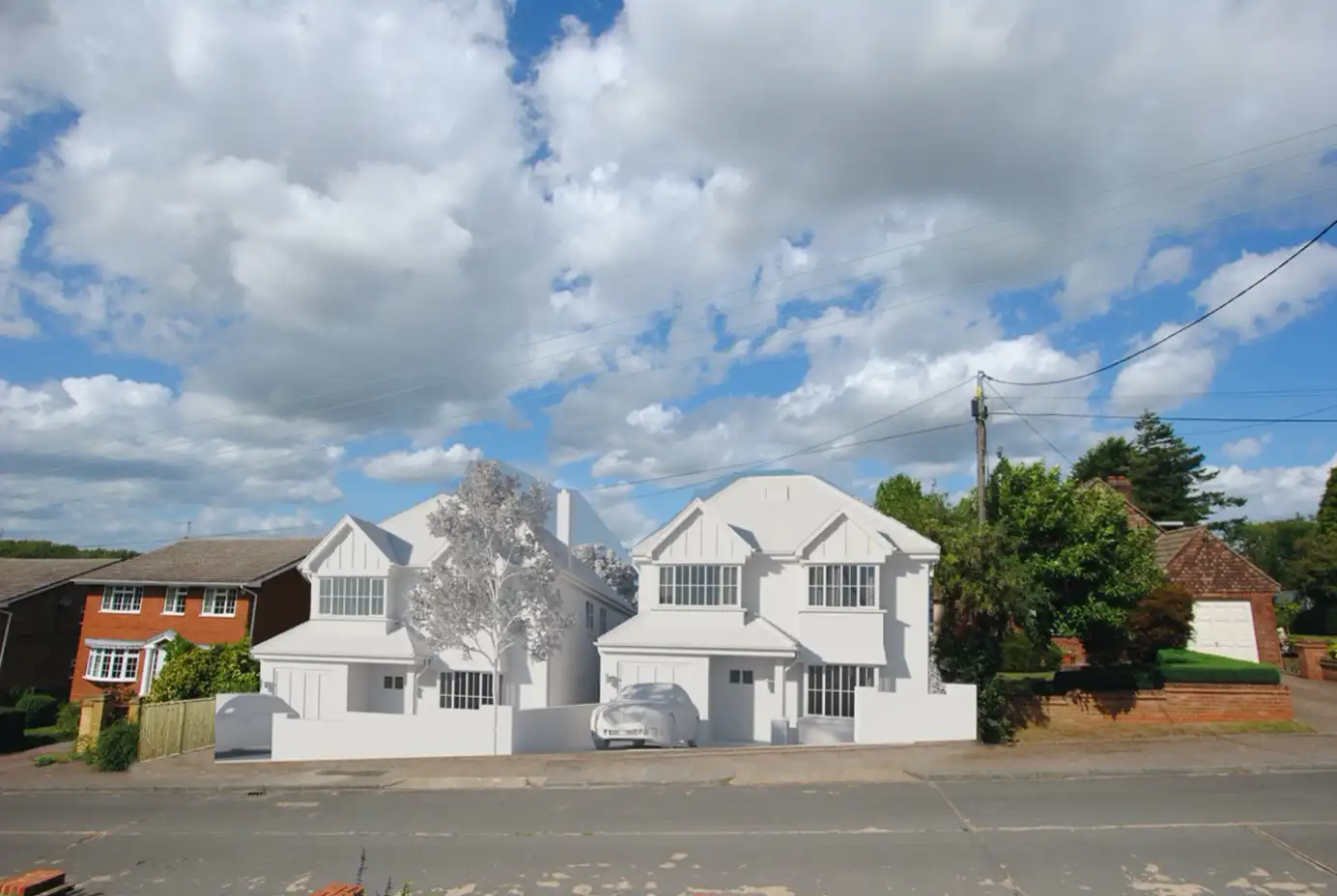
Clay Stage (Step 1 of 2 in CGI process)
Our artists will also want to know what type(s) of CGI you will need. They will ask if you want a front elevation and/or rear elevation, street scene and/or interior(s) etc.
A decision to animate any CGI (except for composites as above), can be taken at the outset or later, since the original CGI build will be used for this.
When the clays are finished, we will add textures such as roof coverings, bricks, landscaping and so on. To do this accurately, we will need to know what materials are proposed to be used. The makes and colours of materials, the style and colours of window frames, front doors, and garage doors. What type of hard landscaping will be used – block paving/tarmac or whatever. If we’re building a kitchen for you, in a similar way we’ll need to have a drawing of the intended layout and finishes etc – including wall and floor finishes. This information could be provided by you at the outset, or when you have approved the clay.
When
The whole process for average-size still CGIs usually takes three weeks, but this will depend on the quality of the original information provided and on there being few amendments that are the result of design changes. Animated CGIs usually take a little longer. Of course, larger projects– apartment blocks and the like, may take longer still. DCTR will be happy to advise on the anticipated delivery date at the time instructions to proceed are confirmed. So, whether the result is to be used for funding/planning or marketing purposes, the sooner you commence the process, the better.
Who
DCTR is an award-winning property marketing agency serving estate agents and developers of all sizes in the UK and abroad. The business started as Doctor Photo, essentially providing photo-editing services to the property industry and evolved into a full-blown property marketing agency providing 50+ services including design, mini websites, photo editing and, of course, CGI in all its property-related forms. The team is based in Camberley, Surrey and includes arch-viz designers, interior designers, sketch artists, photo-editors, floor and site plan creators, graphic artists, and designers. It’s led by Tom Durrant a marketing professional and Bex Cross, our Creative Lead.
Where can you send the assets to and obtain a quote?
Email studio@dctr.co.uk or call on 07919151015
About the Author – John Durrant (Founder DCTR)
This blog was supplied by DCTR.

DCTR is a full-blown property marketing agency, having quietly built a formidable team of creatives that are leaders of a generation in property marketing.
We specialise in creating digital-first marketing assets, all built to resonate with the modern day consumer and optimised for everywhere – from Rightmove to TikTok.
Based in Surrey (Camberley to be exact), our team of 14 remarkably talented creatives specialise in CGI, VR, design, branding, digital-design, print, retouching, motion-graphics, interior design & much, much more.
Oh, and we don’t just make property marketing assets. We have extensive experience in re-brand projects, marketing strategy, branded video & social content too, inside and outside of property.
Get in touch with DCTR through their website.
Book a one2one with Charlotte

Start learning
Start your 14 day FREE trial
- FREE 14-day trial
- No payment details required
- Cancel anytime